Like A Dragon: Infinite Wealth
Started: January 21, 2026
Finished: February 7, 2026
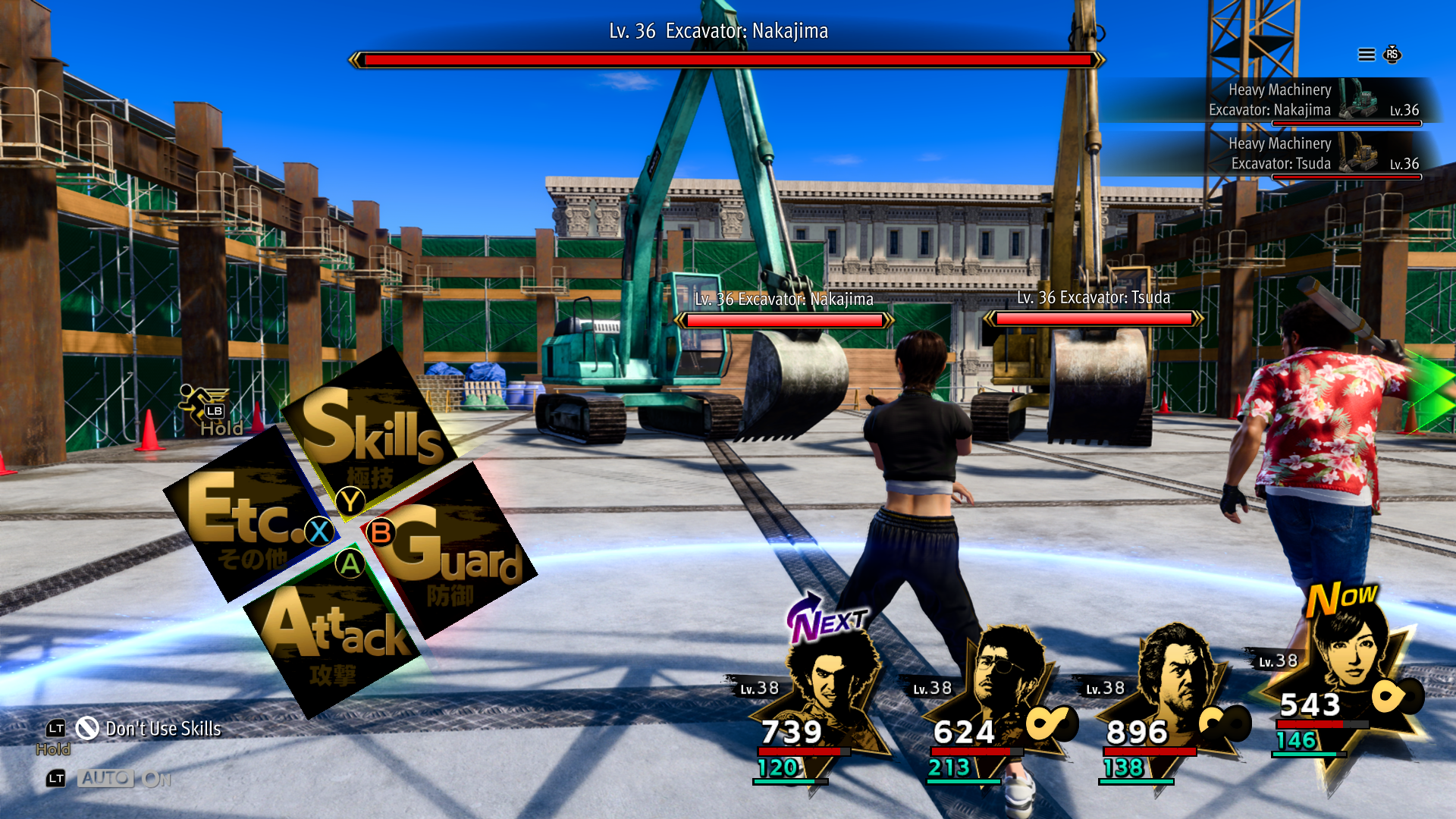
Starting out 2026 hot with my favourite new JRPG franchise where you play as middle aged failsons centred around a new face for the franchise, Ichiban Kasuga, following his first title Like A Dragon (LAD). Off the beat I can tell they've put some more depth into the engine; there's parries in the combat now, you get more control over your position between turns which can allow for back attacks on enemies for critical damage, interactions with other party members via combat attacks, or the environment which brings back something that feels like the heat actions of previous games. In general the RPG systems feel more fleshed out. Just about every skill has some sort of QTE to improve its efficacy for more player engagement, big tag team combo attacks set to a special energy meter that builds up over time à la Omori or Chrono Trigger, and in general the combat feels much better this time.
The job system is mostly the same, although the jobs feel a lot better balanced than in the previous entry, letting you dictate your party comp a bit more by rule of cool rather than having to spend much thought on your squad composition's utilities, strengths, and weaknesses. Some of this is probably due to the game as a whole seems a lot easier than in LAD? I haven't really struggled with a fight at any point, and the only time I did was because I picked up a sidequest in an area I was way, way too underlevelled to be in, and unfortunately it turns out this was a battle you can't simply flee from or eat a money loss on if you lose - I was met with a screen saying "Retry?" and "Exit to title screen." Lost about 90 minutes of progress on that oaf move, but that's the only time (so far) the game has given me a run for my money.
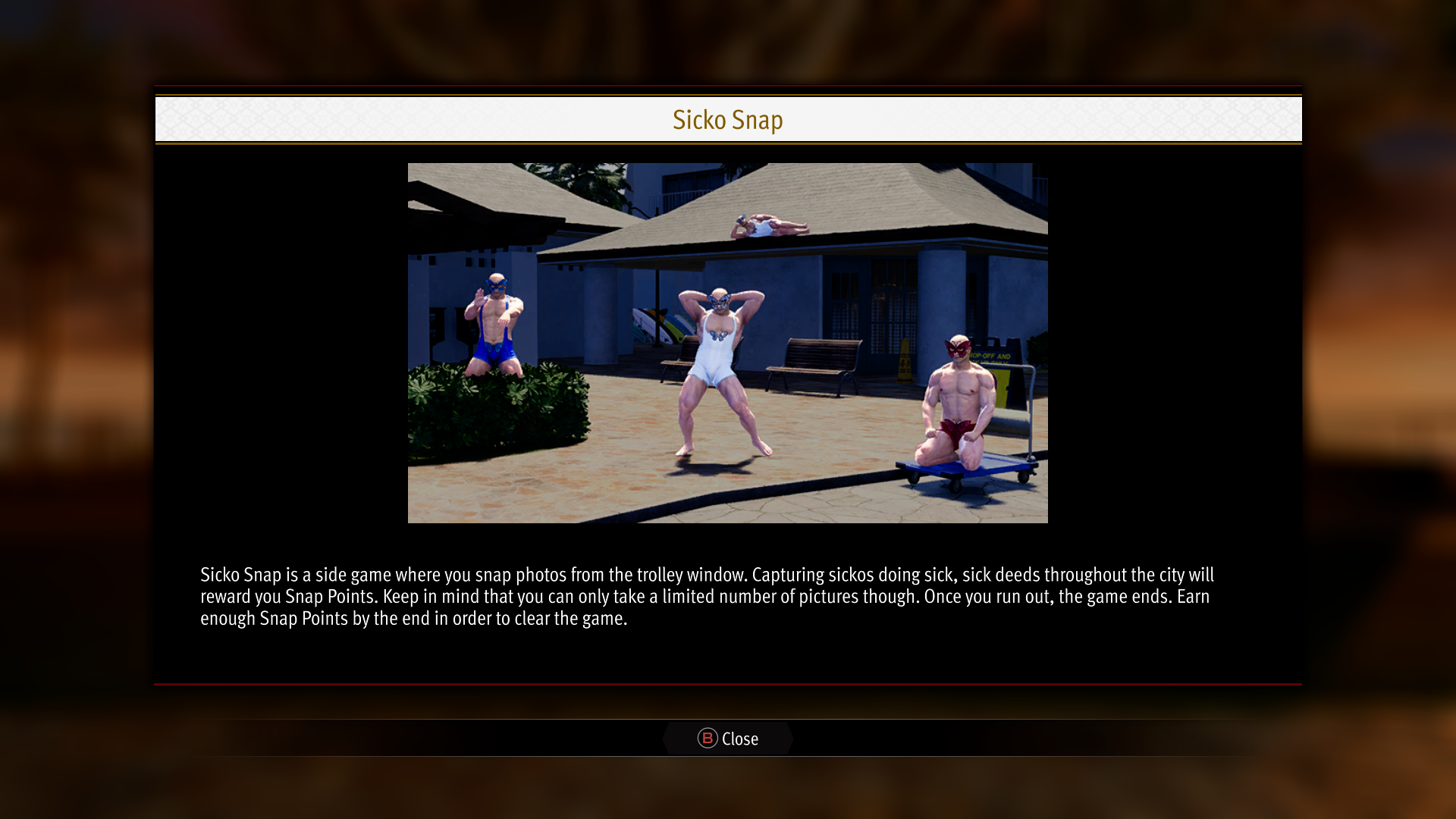
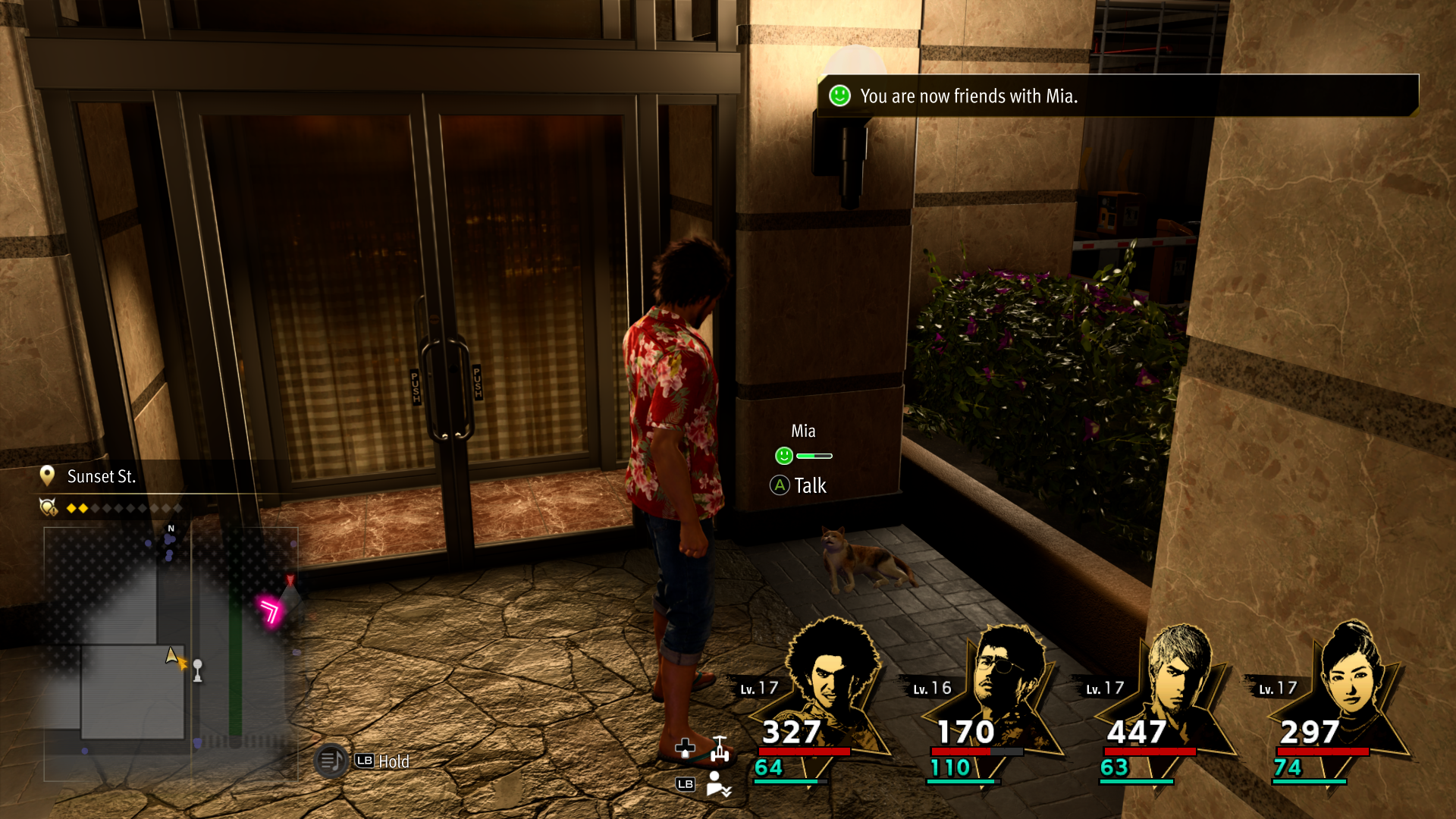
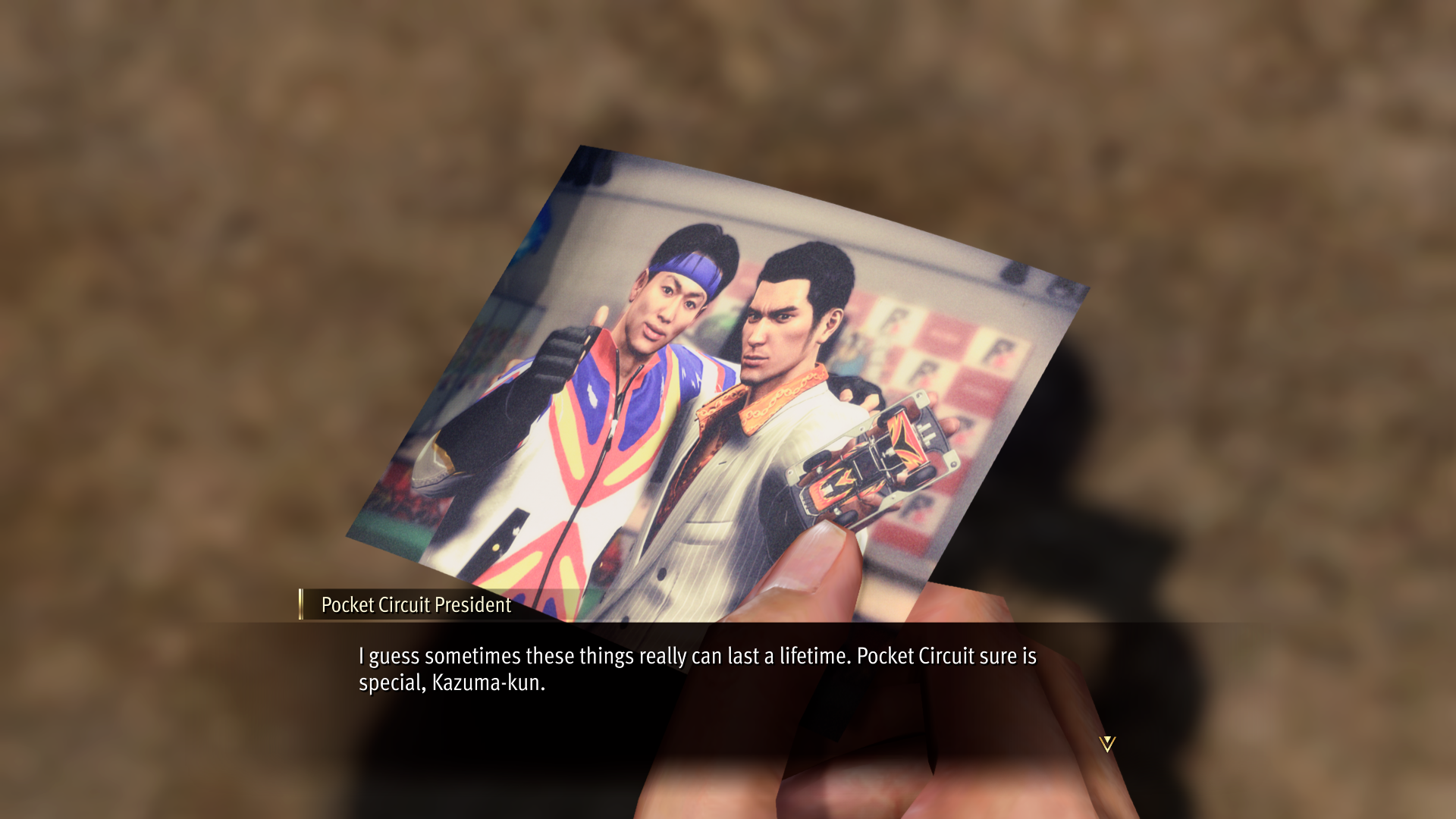
The other primary gameplay pillar holding up the Yakuza franchise is its abundance of mini-games, which unfortunately in this entry I found kind of lacking and disappointing. The Cabaret Management and Pocket Racing are completely gone, as is the Business Management from LAD, replaced with a "Dodonko Island" management thing, which is effectively Animal Crossing Tycoon. I found this just okay; it wore out its wonder pretty quickly, and compared to past titles, was not a very rewarding minigame either monetarily or in the story/character bonds explored in it. One of the weaker core distractions a Yakuza game has had, in my opinion. I don't have much to say about the rest. Another big thing with this series is the sub-stories which overall felt underwhelming compared to last entries, but with each title there's usually a story that hits for me and without a doubt for this entry it had to be "Let It Snow" which was incredibly heartfelt. I'll touch on them more later, I just wanted to note this one somewhere here.
The story picks up a few years after where Like A Dragon (LAD) left off, following the mass dissolution of the largest Yakuza groups as organized entities and our cast adjusting to that world and building their lives back up from the events of that game. Ichiban is an interesting character in contrast to the other main people in the franchise - his unalloyed earnestness makes him effortlessly likeable and helps a lot in getting me invested into his journey, which I think is an important aspect of the franchise to bring up: the plots of Yakuza games have never been super compelling in their own right. Where this franchise has shone since its inception is in writing characters. Their growth, journeys, and relationships they develop with others is where these games excel, so I probably won't talk much about the actual minutiae of the plot, since a basic summary of it wouldn't do the game justice.
One thing I wasn’t a fan of early on is the game establishing Ichiban having a crush on our only female party member, and core teammate from LAD, Saeko. It doesn't feel forced per se, but the reason I dislike it is because in LAD, the story did a very good job of incorporating a co-ed composition to the core group without leaning on romance as a way of binding those characters together in a way that felt sincere, mature, and tender - this is something I find very rare in media in general. Seeing bonds between opposite-sex characters where the friendship or camaraderie is itself the thing to be valued and sufficient for two characters to care for one another and not the promise or implication of romantic entanglements is a dynamic I like seeing, so I'm mildly let down to see a potential about-face taken on that here. I will say now having beaten the game, I don't feel this harshly about it, as it was never a critical part of Ichiban's character arc in this game (although it was a mildly-present one), however I was pretty annoyed with how it ended. At the end of our game, after Ichiban has learned more about himself and others and realizes why his first attempts with Saeko went so wrong, we get a more mature and heartfelt declaration of intent and feelings, which feels appropriate and I am fine with, only for it to end in a gag that has Saeko running out on him and leaving the situation back where it started.
A line I've heard said about the Yakuza games recently is "It used to be a serious game with silly moments, and now it's become a silly game with serious moments" and I do think that strikes to the core of it here. If you're going to have an earnest attempt at a character dynamic like this, then commit to it. Ending it on the note it did feels like the writers going "haha jk ;p" which feels like a lazy and almost inappropriate note to end the game on (these are the last moments we see either Ichiban or Saeko in for this game) especially given how serious the next scenes are.
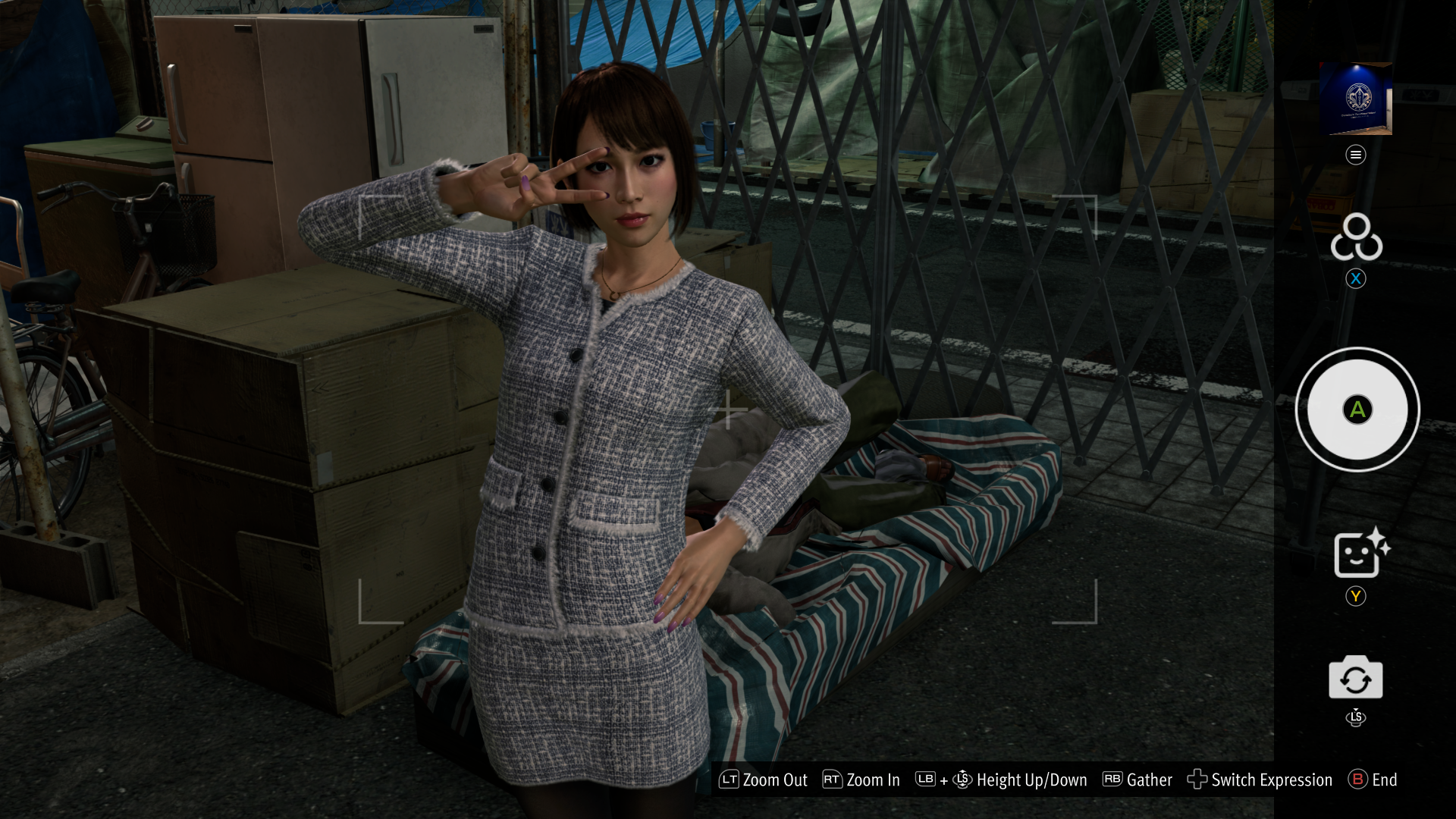
Something I was chafing against with this game for the first ~25 hours was the heavy pacing issues. In the early introduction (10 hours or so) your party members are routinely being given and taken from you, without much breathing space. It took me shy of 30 hours until the game felt it had stabilized and I could actually dive into its content, which is a really long time - longer than many games. Something that padded this wait time out was the fact that this game has an overwhelming amount of 'stuff' in the form of sub-stories, mini-games, and persistent collectable stuff it wants you to be aware of and takes a lot of time to introduce you to. I think around 20 hours in it introduced me to Dodonkon Island - the big subcareer mechanic, and it took me a few hours until I was able to go back home to play the core game again, which sums up how I was feeling for the first third of the game: my controller being suddenly yanked out of my hands for an hour because the game wanted to steer me from the core story to introduce me to some new mechanic I'd have to keep in my mental rolodex going forward. Often these moments happened with really poor timing, as I felt engaged with and in the middle of a story event I really wanted to continue with.
Eventually this plateaued and there was a good payoff for the wait, but it felt excessive and caused me to need a lot of time before I felt I was fully locked in on the game. I was worried for a while that this game would have a constantly rotating cast, as like I said, the previous game shined because it put a core group of people into the spotlight and rarely let up on them, allowing for a lot of time with the characters to appreciate their growth and complexities. Fortunately this was not the case and the end result was pretty good in this regard. Around the point where the game splits into two - one following Kiryu in Japan, and one following Ichiban in Hawaii - I felt myself falling into the familiar stride with the Yakuza games where I was vibing with the unique style and format the series has and found myself increasingly unable to put it down, which is always a good sign.
That Kiryu/Ichiban split brings me to the most notable thing about this game: Infinite Wealth is effectively two separate games bundled in one, held together only by game engine and the early establishing plot. Going forward, the interactions between the two sections are minimal, and never via gameplay. The gist is that Kiryu, having his health get noticeably worse with his cancer taking its toll, goes back to Japan to recuperate and sets out with a core group (Nanba, Seonhee, Saeko) to try and fulfill a bucket list at the behest of Nanba. Ichiban on the other hand remains in Hawaii with his core group (Adachi, Chitose, Tomizawa) in order to find Akane and ultimately investigate the Palekana conspiracy. I have a lot of thoughts on this because while there are effectively two halves to this game, the devs seem to transparently care a lot more about Kiryu’s half. Kiryu's chapters and presence in this story is overwhelming to the point that it overshadows all else, which is baffling as the Like A Dragon title was launched specifically to get away from Kiryu and introduce a new face (Ichiban) for the franchise. From here on out, I enjoyed everything to do with Kiryu a lot, but I kept feeling conflicted with how this felt like it should have been its own game; a game the devs seemed way more interested in making.
From the tone of the game, they want you to think this is the grand franchise send off for Kiryu, as we escort him tying up loose ends, but the game has built him up so much that I didn't believe it would actually do it (spoilers: it doesn't). This makes me feel the franchise has hit the Goku problem - they want to move on, need to move on from their core figure, but just can't bring themselves to do it, so we keep getting fakeout attempts to do so. This conflict was in the back of my mind for the rest of the game going forward, which has led to some mixed feelings on the game. That being said, those gripes are more conceptual and thoughts I have while I'm thinking about the game in bed or on my walks; while I'm playing it in the moment, it does have me completely locked in, invested, and constantly wanting to see what's next. I think it's very well done. Now that I'm there, the gas hasn't eased off for a moment, and the game has turned from something I've gone from playing for an hour or two a day into something that consumed my days.

The content regarding Kiryu and his bucket list are extremely well done. The core mechanic for this half of the game is called "Awakening" where you level Kiryu up by encountering old friends/connections, or going to old spots and reminiscing and reviewing his life through flashbacks that span the length of the franchise. The callbacks and fan service during this section are tasteful and something I found quite touching at times. The problem is it feels like this all belongs to the wrong game. At this point Kiryu so completely overshadows everything else going on that I don't really care much about the 'main plot' regarding rescuing Akane, reuniting Ichiban with her, and figuring out the mystery of the big bad. The second Like A Dragon game - a new series intended to make the franchise unreliant on Kiryu and give it a new face - has become a game about putting Kiryu on one of the more venerated pedestals I've seen a game give a character that isn't made by Kojima.
After getting to experience more of Kiryu's stuff, explore his substories, and more of his Memories, it's like a breath of fresh air has been injected into the game. Suddenly the writing is more engaging and touching, the substories have become more dynamic, interesting and varied and giving me the feels that I remember getting from past Yakuza titles, that felt missing until then. One complaint I had I didn't touch on yet was the substories seemed very ... lacking. They were more boring, more one dimensional, more tedious, or just straight copies of ones from earlier games. Now I can see this is just an issue regarding Hawaii and Ichiban's story, because back in Osaka and Tokyo with Kiryu, the game's exploration gets interesting and rewarding again, which leaves me baffled and conflicted for the nth time now: why is the main character getting overshadowed so hard in his spinoff series to the point where he feels like a secondary protagonist, and why do the Kiryu sections have so much more obvious love and care put into their writing and development? I'm really enjoying them, it's just a weird dynamic to be juggling.
This dynamic would not abate for the rest of the game: 50~ hours into the game and this has only gotten more true. Some of these Kiryu segments are phenomenal and highlights of the series to the point where Kasuga's part in this game feels like it's withering on the vine. I think in the last 15 hours maybe 3 of those have been Kasuga’s? Really odd balancing going on. That being said, the Kiryu stuff is done very well and I'm loving it. A lot of moments have put a big goofy smile on my face. In the closing chapters of the game, the quality skyrockets. Ichiban's segment becomes much more engaging and captivating, but once again is overshadowed to a ludicrous degree by Kiryu's segment, which might contain some of the peak moments of the franchise. This is a game with incredibly high highs and while it doesn't get very low, it certainly took a while to get here. I haven't felt this conflicted about a game in a while. There's so much more I can speak on but this has already gone on long enough, but I do have a lot of thoughts about this game and I’m thinking this game might be one where a quick follow-up replay is warranted while I process my thoughts on it.
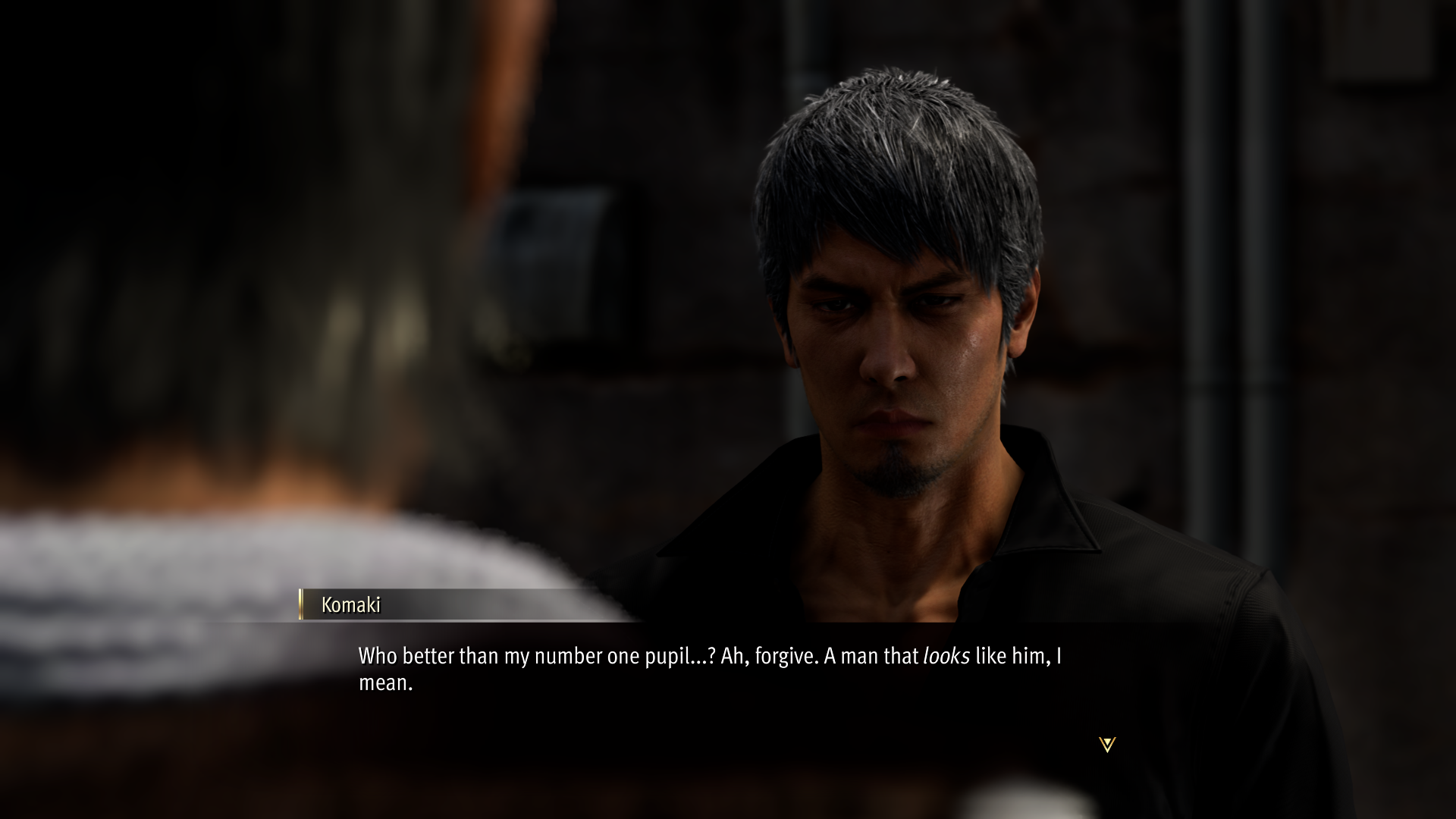
I haven't talked much about the plot or narrative yet, and this is a game where the narrative is way, way more interesting than the plot, so that's where I've got the most feelings and on my mind. This game deals with Kiryu staring down the fact that with a progressing cancer, he doesn't have much time left to live. Much of the latter half deals with after being asked "what would you like your last meal to be?" Kiryu having no easy answer and realizing he has lived very little of his life for or in-touch with himself. Most of the people he has bonded with and made connections with are people who think he up and disappeared one day, or think he is dead, as part of the (convoluted) ploy of keeping his loved ones safe. One of the integral mechanics for this leg of the game has you running around the map and encountering areas that put Kiryu on little nostalgia trips, recalling events and characters from previous entries in the franchise and musing about what those mean to him at the end of his life. I found this section of the game to be the best written - by far - and very tenderly done.
A chunk of it is fan service, but this is a good example showing that's not inherently bad, and I think it was executed well here. The quality of them varies - some are incredibly brief text snippets, while some are fleshed out sub plots - but this is the part of the game that has resonated the most for me. The basic formula of these is Kiryu either interacts with old connections under a pseudonym with them not knowing, or overhearing those connections converse with his friend about him, and finding out the lasting legacy and impression he left on others and discovering how others remember him or what they remember him for are both surprising and profoundly touching.
One of the consistent themes in these recollections is finding out that a man who clearly views himself as a ghost passing through this world simply phasing through the people he encountered did actually have a tangible impact on them - that they remember him fondly, sometimes decades after the fact is something I found myself resonating with. I think at some point in our lives, most of us have the fantasy of being able to observe our own funeral. Who would show up? What would be said? What would the mood be? How people would eulogize you and what the sum total of your deeds in life amounted to in the eyes of others? Here we're given a character who gets to do exactly that, and to good effect, I think. It's not all sweet and there is a heavy undercurrent of melancholy of time that could have been spent in ways assumed closed off, but that's a good representation of living life, I think. None of us are omniscient, and even if we do everything 'right' it's still impossible to live a life with no wasted opportunities, as there will always be a nigh infinite amount of choices to us in life with an incredibly narrow sliver of time with which to pursue them. For every one thing we use our time to pursue, there's dozens, if not hundreds of others scorned as a result.
Ultimately, I'm finding this section a good reminder that one of the great tragedies of life is that we never truly know the positive ways we impact or are thought of by others - a lot of people in life will go out of their way to tell you the negative impacts you've had on them, but very few will be a similarly vulnerable to wax poetic about the good, at least until it's time for eulogies at which point it's too late for you to hear them. The titular “Awakening” mechanic for this half of the game refers to Kiryu rediscovering himself through these realizations, and by extension, finding he still has things worth living for and building up the willingness to undertake the struggle to keep living.
The last note I'll make about the game is that while the final act was extremely good and had me grinning from ear to ear for much of it, they didn't stick the landing on the ending. The ending for this game felt baffling and like I was getting faked out - it comes on incredibly abruptly, with some core characters not even being shown again and many loose ends left that simply don't get acknowledged. The ending with Ichiban and Eiji feels out of place and like the writers just wanted to rehash the ending overtures of LAD in a way that comes off as forced. The last glimpse we see of Ichiban is him finally approaching Saeko as a better, more mature and complete person, only for the game to renege on that progress and turn it into a gag. We then cut to Kiryu where he's in the hospital, thoroughly emaciated and looking the worst this character has ever been depicted, finally embracing fighting his illness and wanting to live, and being visited by Haruka which is a monumental moment for him, before it cuts to a big "FIN" titlecard. I don't have Star Wars Fandom Brain - I don't need every little thing spelled out and wrapped up in meticulous detail, but this feels barebones as hell and doesn't feel like I got much of a conclusion at all. It feels like they blinked at making permanent changes to the franchise and left the door open for Kiryu's return, denying resolution on this game's narrative to do so, and it did retroactively mar the game in my eyes a bit. I had started to accept this game's raison d'être was to send off Kiryu, but they walked that back in the final few yards.
I guess a closing acknowledgement is this is the first real game I've been able to sink myself into in a while. 2025 ended very badly for me. Personal life issues and loss of a very important relationship did a number on me in their own right, scuttled my plans to move out of an environment I was excited to put behind me, and put a barrier to medium term plans I had for the future I'm still trying to figure out. On top of that, I've been dealing with a mystery health problem that my doctors have alarmingly said could range from simple nutritional imbalance to serious kidney disease with potential failure down the road, and dealing with that and the frequent hospital trips alone has been hard. My mental state in the last 3 months has been such that I haven't been able to focus on anything for more than 10 minutes at a time. While I am nowhere near back to 100%, getting into this game is the first time since October I've had the wherewithal to focus on something, emotionally engage with it, remember much of it and pen down some basic thoughts on it. Much of my favourite media of all time is my favourite because it was something I encountered when I was in the recovery phase of a bad depressive bout and it was the first thing to resonate with me and make me feel something; I'm wondering if this game will carve out a similar venerated place in my psyche. The Kiryu portion of this game's core mechanic is called "Awakening", where he progresses by getting increasingly in touch with himself via these nostalgia trips and the people he holds dear piece by piece - I suspect the reason I was drawn to this portion of the game so heavily is because I clearly relate to a lot of the things I wrote above concerning this component of the game, and how much it has made me realize I'm hoping I can do the same for myself. Either way I think writing this has been beneficial and perhaps even therapeutic, so I'm glad to have done it.
8/10
This score doesn't do justice to the peaks the game hits, but I can't ignore how a lot of it was meandering or mid. Genuinely a hard game to rate.
The OST was fine. A lot of tracks that establish the mood needed, but almost none of which are things I'd listen to outside of the context of the game. An idea I had is if I do more of these writeups, at the end I'll post links to songs from the OST I thought were bangers and could be appreciated in their own right, but this was a bad game to start this with as the only two I could tease out were: